Introduction:-
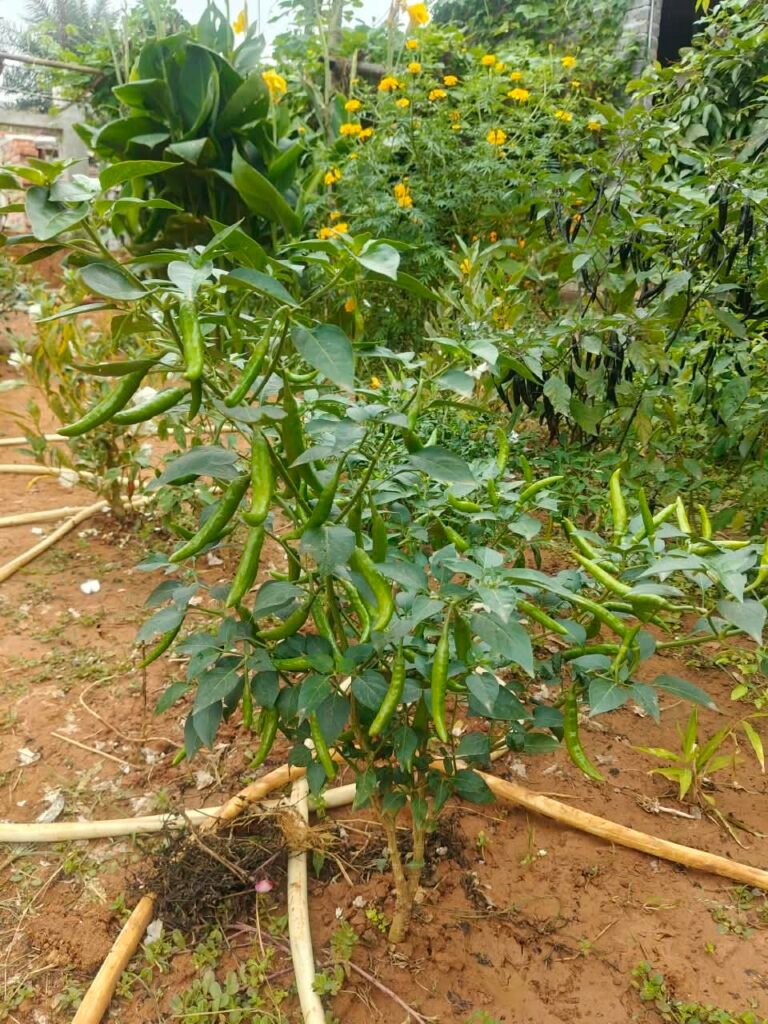
Chilli (Capsicum annum L.) Is one of the most important spice and vegetable crops grown in India. It belongs to the family Solanaceae. Chilli is cultivated for its green fruits, which are used as vegetables, and it’s red ripe fruits, which are used as spices.
Chilli contains capsaicin, which gives it a pungent taste. It is also a suit.Vitamin c vitamin a and antioxidants. India is one of the world’s major producer exporters of chilli.
Table of Contents
Botanical Classification:-
- Common name: Chilli
- Hindi name: Mirch
- Botanical name: Capsicum annum
- Family: Solanaceae
- Chromosome number: 2n=24
- Origin: Tropical America
- Nature: Annual or short-lived perennial
- Economic part: Fruit
- Pollination: Predominantly self-pollinated, with some cross-pollination
Climate Requirement:-
Chilli grows well in a warm and moderately humid climatic conditions.
- Optimum temperature: Approximately 20-30 ⁰C.
- Sunlight: Requires good sunlight for healthy growth and fruit production.
- Rainfall: Moderate and well-distributed rainfall is suitable.
- Humidity: Moderate humidity is generally favorable.
- Frost: Chilli is sensitive to frost.
- Excessive rainfall: Can cause water, logging, flower drop and disease problems.
- High temperature: Very high temperatures, especially during flowering, can reduce fruit setting.
Best growing conditions: Warm weather adequate sunlight and a well-drained field.
Soil Requirements:
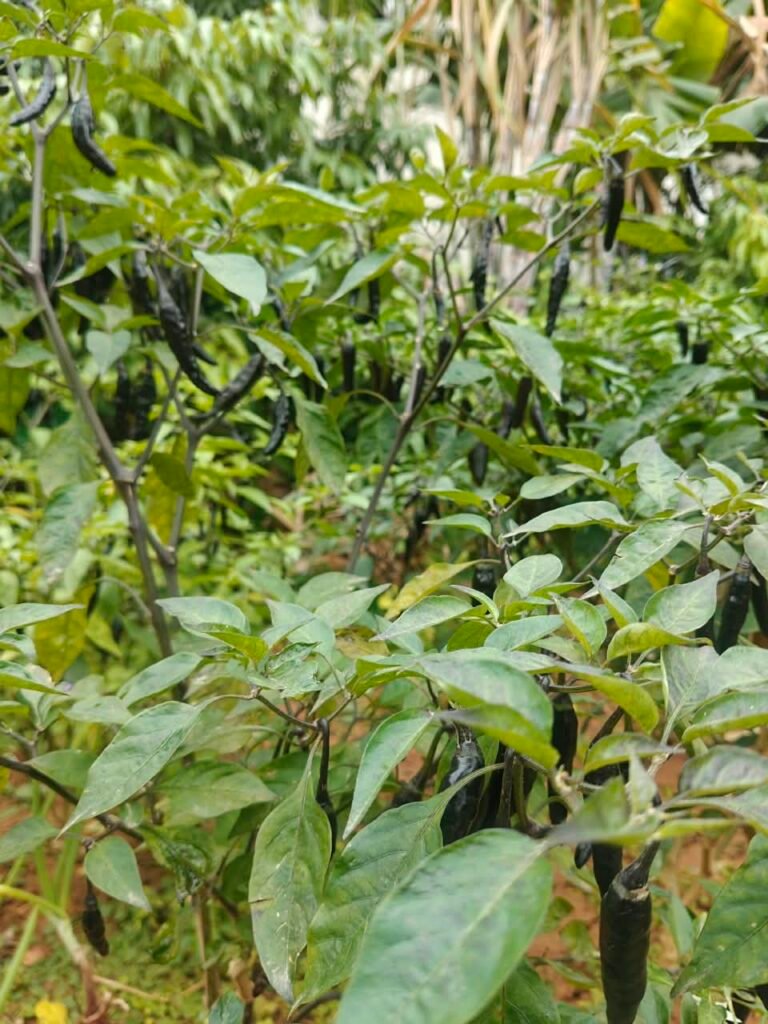
chilly can grow in different soil types, but well-drained loamy or sandy loam soil is generally preferred.
suitable soil conditions:-
- Soil pH: Approximately 5.5-7.5.
- Good drainage and aeriation.
- Adequate organic matter.
- Good water holding capacity without water logging.
Avoid high saline soils and fields where water accumulates after rainfall.
Popular Chilli Varieties:-
Variety selection depends on the climate, market demand, fruit colour, pungency and whether the crop is intended for green or dry chilli production.
Some commonly known varieties add hybrids include:-
| Variety | General characteristics |
| Kashi Anmol | Early, compact plants suitable for green chilli production. |
| Pusa Jwala | Popular variety with long slender fruits |
| Pant C-1 | Variety used for chilli cultivation |
| Arka Lohit | Note for red fruits and dry chili production |
| Guntur Sannam | Important commercial type used for dry chilli in spice markets |
| Byadagi | Known for its color and use in spice production |
| Tejaswini |
Important:- Availability and suitability vary by region. Choose varieties recommended by your local krishi vigyan kendra (KVK) or agricultural university.
Season of Sowing:-
Chilli can be grown in different seasons depending upon depending on the region, irrigation facilities add variety.
In Jharkhand add other parts of eastern India. The following is the gentle guide.
| Activity | Approximate period |
| Kharif nursery showing | May- June |
| Kharif transplanting | June- July |
| Rabi nursery sowing | September-October |
| Rabi transplanting | October- November |
These periods may vary according to rainfall, temperature and local cultivation practices. In rainfed areas, showing and transplanting should be adjusted to the onset of monsoon.
Seed Rate:-
The seed rate depends on the variety, seed quality, spacing and method of cultivation.
- Open pollinated varieties: Approximate1-1.5 kh/ha for nursery raised seedlings.
- Hybrids: Follow the seed company’s recommendations. The quantity is generally lower. Because hybrid seed is more expensive and seed size and germination differ.
Always use healthy, certified or quality assured seed from a reliable source.
Nursery Raising:-
Chilli is generally propagated through seeds and transplanted into the main field.
Steps for nursery preparation:-
- Step 1:- Select a suitable nursery site
- Choose a sunny, well drained location
- Avoid filled with a history of serious soil borne diseases.
- Step 2 :- Prepare the nursery beds
- Make raised beds approximately one meter wide.
- Keep the beds about 15-20 cm above the ground to improve drainage.
- Incorporate well decomposted organic manure if appropriate.
- Step 3 :- Sow the seeds
- Sow seeds in shallow lines
- Cover them lightly with fine soil or a suitable nursery medium.
- Water gently to avoid displacing the seeds.
- Step 4:- Maintain moisture
- Keep the nursery medium moist but not waterlogged.
- Protect seedling from heavy rain and excessive heat.
- Step 5:- Transplant healthy seedlings
- Seedlings are generally ready for transplanting in about 30-40 days, depending on growing conditions.
- Select healthy, disease-free seedlings with well-developed roots.