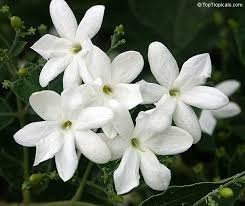
Introduction:
Jasmine is a perennial, evergreen, fragrant flowering shrub grown for loose flowers, garlands, perfumes, essential oil, cosmetics, and religious use. It is one of the most important commercial flower crop in India.
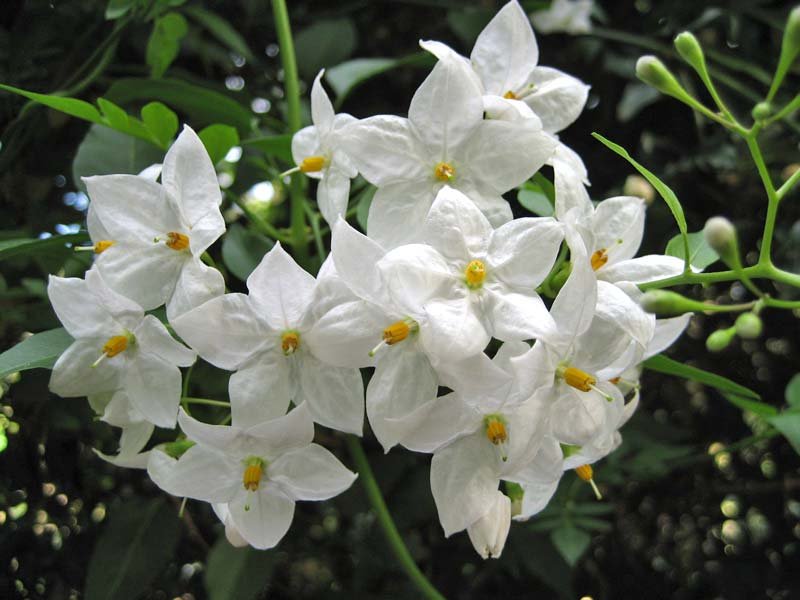
Table of Contents
Botanical classification:
| Character | Details |
| Botanical name | Jasminum sambac |
| Family | Oleaceae |
| Genus | Jasminum |
| Chromosome number | 2n = 26 |
| Origin | India & Southeast Asia |
Important species:
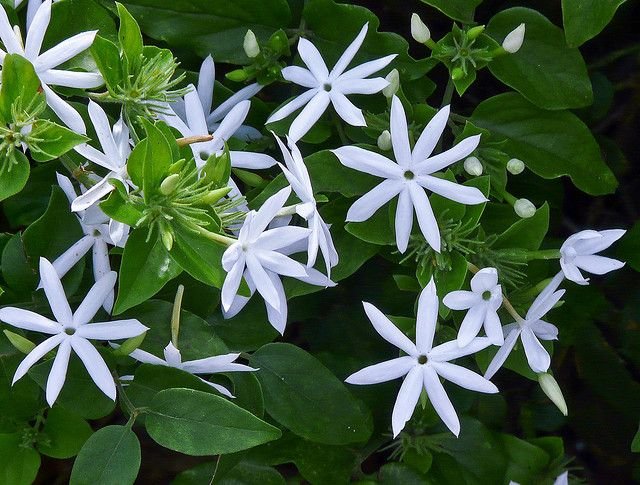
- Mogra / Arabian jasmine : Jasminum sambac – loose flowers, garlands, worship.
- Chameli / Spanish jasmine : Jasminum grandiloquent – perfume and essential oil.
- Juhi : Jasminum auriculatum – fragrant loose flowers.
Climate and soil:
Jasmine grows best in a warm tropical climate with 20 -35 ⁰C temperature, 800-1200 mm rainfall, full sunlight, and 6.5-7.5 soil pH. Well-drained loam or Sandy’s loam is ideal.
Varieties:
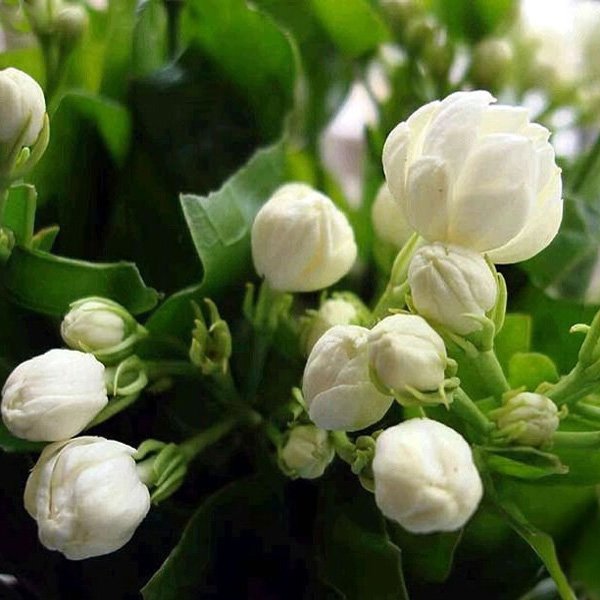
| Species | Varieties |
| J. sambac | Gundumalli, Madanban |
| J. grandiflorum | CO-1, CO-2 |
| J. auriculatum | CO-1 juhi |
Propagation:
The best method is semi-hardwood stem cuttings. Use 15-20 cm cuttings with 3-4 nodes, treat with IBA 2000 ppm, and rooting occurs in 6-8 weeks.
Land preparation and planting:
- Plough field 2-3 times.
- Apply 20-25 FYM/ha.
- Pit size: 45 × 45 × cm.
- Planting season: June-July
- Spacing: 1.5 × 1.5 m.
Nutrient management:
- FYM 10 kg/ha.
- Nitrogen is given in two split doses.
- NPK ratio 60 g N: 120 g P: 120 g k.
- Apply in two equal splits: June and November.
Irrigation:
- Immediately after planting.
- Summer: every 5-7 days.
- Winter: every 10-15 days.
- Drip irrigation saves water and increases yield.
Pruning and training:
Prune during December-January by removing old, weak, and diseased branches. This encourages new shoots and higher flowering.
weed management:
- Hand weeding: 3-4 times/year.
- Mulching with straw or dry leaves.
- Earthing up after weeding
Flowering and harvesting:
- Flowering begins 6-8 months after planting.
- Harvest in the early morning at the tight bud stage.
- Peak season: March-September.
Post-harvest handling:
- Keep flowers in shade.
- Sprinkle clean water lightly.
- Store at 8-10⁰C.
- Pack in perforated polyethylene bags.
Pest management:
| Pest | Damage | Control |
| Bud worm | Bores buds | Neem oil 3% |
| Blossom midge | Bud drop | Field sanitation |
| Aphids | Sap sucking | Neem insecticide |
| Whitefly | Yellow leaves | Sticky traps |
Diseases:
- Leaf spot: Brown spots on leaves.
- Rust: Orange pustules on leaves.
- Root rot: Wilting and root decay
- Use healthy planting material, avoid waterlogging, and apply recommended fungicides when needed.
Yield:
- J. sambac :- 8-10 t/ha
- J. grandiflorum :- 10-12 t/ha
Uses:
- Garlands and floral decorations.
- Perfume and essential oil.
- Cosmetics and soaps.
- Aromatherapy and ornamental gardening
Economic importance:
Jasmine provides regular income for 10-15 years, has high demand in domestic and export markets, and supports the perfume and floriculture industries.
Advantages and limitations:
Advantages: High value crop, continuous flowering, export potential, suitable for small farms.
Limitations: Labour-intensive harvesting, sensitive to waterlogging, pests reduce flower quality.
Jasmine is an important commercial fragrant flower crop belonging to the family Oleaceae. It is cultivated mainly for it’s highly fragrant flowers, which are used as loose flowers, garlands, religious offerings, perfumes, cosmetics and essential oils.
Jasmine is generally a perennial shrub or climber and can remain productive for several years when properly managed.
Propagation by cuttings:
Semi-hardwood cuttings are commonly used.
Procedure:
- Select healthy, disease-freeze mother plants.
- Take mature but not excessively woody shoots.
- Prepare approximately 15-20 cm long cuttings.
- Keep 3-4 healthy nodes.
- Remove lower leaves.
- Treat the basal portion with a suitable rooting hormone such as IBA.
- Plant in a well-drained rooting medium.
- Maintain adequate moisture and humidity.
- Transplant rooted cuttings after adequate root development.
Conclusion:
Jasmine is a profitable perennial flower crop. Proper propagation, balanced nutrition, timely pruning, irrigation, and pest management ensure high yield and premium-quality fragrant flowers.
http://eagri.org/eagri50/HORT281/pdf/lec37.pdf