Introduction
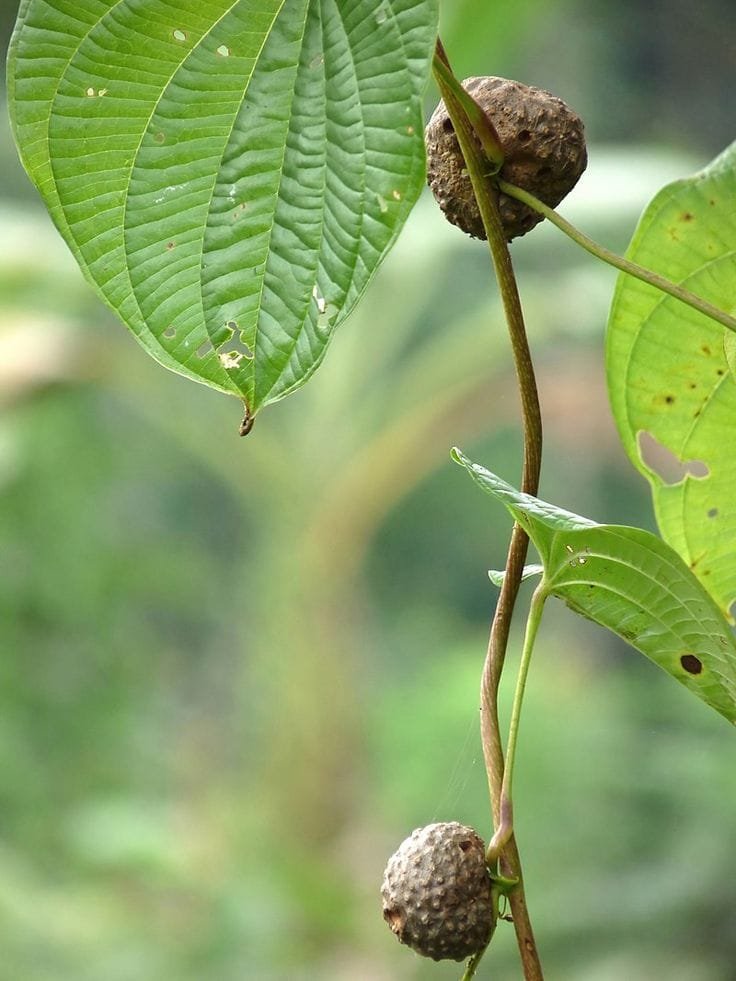
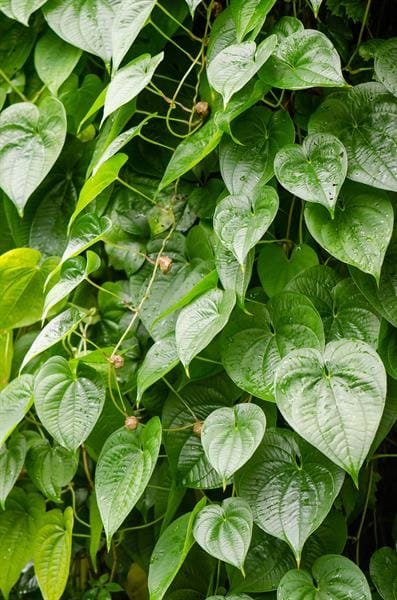
Dioscorea is a genus of monocotyledonous, tuber- bearing plants belonging to the family Dioscoreaceae. It is commonly known as yam and is one of the most important tropical tuber crops grown for food, nutrition, and medicinal purposes. The genus contains about 600 species, of which around 10 are cultivated commercially. Dioscorea species are widely distributed in the tropical and subtropical regions regions of Asia, Africa, the Caribbean, and South America.
Botanical classification
- Kingdom: Plantae
- Division: Angiosperms
- Class: Monocotyledonae
- Order: Dioscoreales
- Family: Dioscoreaceae
- Genus: Dioscorea
Center of Origin of Dioscorea (Yam)
The genus Dioscorea has multiple centers of origin as different species originated in different regoins of the world.
- Primary center of origin: South-East Asia (Indo-Malayan region) for many Asian species especially Dioscorea alata (Greater yam).
- West Africa: Center of origin for Dioscorea rotundata (White yam) and Dioscorea cayenensis (Yellow yam).
- China: Center of origin for Dioscorea opposita (Chinese yam).
Ancestors
- Dioscorea alata: Dioscorea hamiltonii and Dioscorea persimillis.
- Dioscorea rotunda and Dioscrorea cayenensis: Dioscorea abyssinica.
Area, Production and Distribution of Dioscorea (Yam)
Yam (Dioscorea spp.) is mainly cultivated in the tropical and subtropical regions of the world. It is an important food crop in Africa, Asia, the Caribbean, and the Pacific Islands.
- Major yam-producing countries: Nigeria ( world’s largest producer accounts for over 60% of global production), West Indies, Tropical America and South East Asia. According to the FAOSTAT (FAO) 2025 https://www.fao.org. Area harvested:9.3 million ha, production: 79 million tonnes, average yield: 8.5 tonnes/ha.
- Distribution in India: Yam is cultivated in many humid and sub humid states especially Kerala, Odisha, W.B, Assam, Andhra Pradesh, Tamil Nadu, Karnataka, Jharkhand, Chhattisgarh.
Area and Production (India)
- Area: Approximately 0.20 million hectares.
- Production: Approximately 3.0 million tonnes
- Average productivity: 15-18 tonnes/ha (varies with species and management practices.
Nutritive value
| Nutrient | Amount |
| Energy | 118 kcal |
| Water | 69.6 g |
| Carbohydrate | 27.9 g |
| Protein | 1.5 g |
| Fat | 0.2 g |
| Dietary fiber | 4.1 g |
| Calcium | 17 mg |
| Phosphorus | 55 mg |
| Iron | 0.5 mg |
| Vitamin C | 17 mg |
| Thiamine | 0.11 mg |
| Riboflavin | 0.03 mg |
- Rich source of carbohydrate and energy.
- Contains dietary fiber which aids digestion.
- Good source of potassium helping maintain normal blood pressure and muscle function.
- Provides vitamin C, which supports immunity and wound healing.
- Some species contain diosgenin, a valuable medicinal compound used in steroid drug production
Uses
- Food crop: The tubers are eaten boiled, baked, roasted, fried or processed into flour, chips, starch, and food products. They are a major staple food in many tropical countries.
- Yams are rich source of carbohydrate, dietary fibers, potassium, vitamin C, and vitamin B6, making then an important energy food.
- Some species specially Dioscorea floribunda and D. deltoidea, contain diosgenin, a steroidal sapogenin used in the pharmaceutical industry to manufacture steroid drugs such as corticosteroids, progesterone, and contraceptive pill.
- Yam starch is used in the food processing, paper, textile, and adhesive industries.
- Small or damaged tubers and peels are used as animal feed after proper processing.
Growth and Development of Yam
- Yam tubers exhibit a definite period of dormancy shortly after harvest (3-4 months) due to low Glutathione content and presence of Batatasins.
- Storage at low temperature increases the dormancy period, while at high Relative Humidity decreases the dormancy period.
- There are 4 distinct phases of growth recognized for yams after the period of dormancy:
- First Phase: Up to 6 weeks, elongation of root and vines. Initiation of root development during this phase the vines produces rudimentary leaves called Catophyllus.
- Second phase: Coincides with growth of primary shoot and root ( from 6th week up to 10th week) after sprout emergence. Extensive leaf growth and reduction in root growth are the characteristic features associated with phase 2.
- Third Phase: It coincides with rapid tuber bulking with little or no further increase in vine growth, which commences after 10th week after emergence.
- Fourth Phase: Loss of tuber dry matter during maturity phase.
Climate Requirement
- Climate: Tropical and Sub-tropical.
- Temperature: Optimum 25-30 ºC.
- Rainfall: 1000-1500 mm per year, well distributed.
- High relative humidity 70-80% is favourable.
- Requires full sunlight for growth.
- It is frost sensitive.
- Grows well from sea level up to about 1.500 m, depending on the species.
Seed rate
- Seed rate : 2.5-3.0 tonnes of seed per hectare ( depending on the tuber size and spacing).
- Yield: 20-30 tonnes/ha under normal cultivation.
- Improved varieties with good management: 35-50 tonnes/ha
Varieties
- Greater Yam ( Dioscorea alata ): Sree Roopa, Sree Keerthi, Sree Shilpa, Sree Karthika, Orissa Elite, Bhu Swar, Sree Hima.
- White Yam ( Dioscorea rotundata ): Sree Priya, Sree Subhra, Sree Haritha, Sree Dhanya (dwarf), Sree Swetha (dwarf)
- Lesser Yam ( Dioscorea esculenta ): Sree Latha, Sree Kala.https://www.ctcri.org
https://hortigyan.com/
https://hortigyan.com/effective-dioscorea-cultivation
Dioscorea
Thankyou didi 🫶🏻
Very nice
Very helpful 🙂
Good information 👍
Thank you