Introduction:
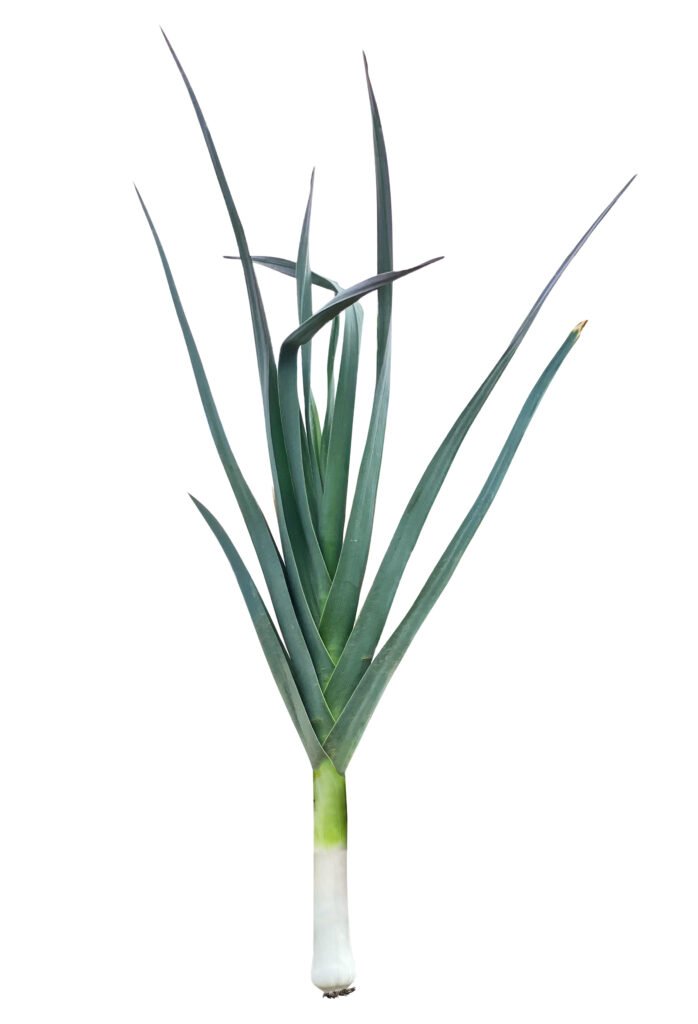
Leek is a leafy vegetable that belongs to the onion family (genus Allium), along with onions, garlic, shallots,and chives. Leek is grown for its long, white stem and flat green leaves, which have a mild, sweet onion like flavour.
Leeks are widely used in soups, stew, salads, stir fried, and many European and Asian dishes. They are rich in vitamin A, C and K, as well as dietary fibre and antioxidants, making them a nutritious addition to a healthy diet.
Leeks grow best in cool climate and are typically planted in well- drained, fertile soil. Before cooking, they should be washed thoroughly because soil often gets trapped between their layers.https://en.wikipedia.org/wiki/Leek
Table of Contents
Origin:
Leeks are believed to have originated in the Mediterranean and Middle East. Today, they are cultivated worldwide, especially in Europe, North America, and Asia.
Taxonomy:
- Botanical name: Allium porrum L.
- Family: Alliaceae
- Chromosome number: 2n= 4x=32
- Origin: Mediterranean region
- Ancestor: Allium ampeloprasum
- Economic part: Blanched stem and leaves
Botanical classification:
- Kingdom: Plantae
- Family: Amarullidaceae
- Genus: Allium
- Species: Allium ampeloprasum var. Porrum
Plant characteristics:
- Height: 30-80 cm (sometimes taller).
- Edible part: White stem (shaft) and the light green portion of the leaves.
- Dark green leaves are edible but are often used to flavour soups and stocks because they are tougher.
Nutritional value (per 100g, approximately)
- Calories: 61 kcal
- Carbohydrates: 14 g
- Protein: 1.5 g
- Fibre: 1.8 h
- Vitamin C
- Vitamin K
- Vitamin A
- Folate
- Potassium
- Manganese
Health Benefits:
- Rich in antioxidants that help to protect cells.
- Supports heart health.
- Good source of dietary fiber for healthy digestion.
- Provides vitamins that support immunity and bone health.
- May help reduce inflammation.
Uses in Cooking
- leeks are commonly used in:
- Soups
- Stews
- Stir- fries
- Salads
- Quiches and pies
- Pasta and risotto
They can be sauted, roasted, grilled, steamed, or eaten raw when young and tender.
Soil:
A well aerated soil with good drainage and good moisture retention capacity with a pH of 6.5 – 7 is best, which should not be subjected to flooding at any time.
Cultivation:
- Climate: Cool weather (10-24 ⁰C ).
- Soil: Fertile, well drained soil rich in organic matty
- Sunlight: Full sum
- Water: Regular watering to keep the soil consistency moist.
- Leeks withstands heat and cold better than onions.
- Temperature is more important than day lenght in seed stalk development.
- It thrives well in higher altitude.
Seed Rate:
- About 5-7 kg of seeds is required to be sown per hectare.
Spacing:
- Seedling are spaced at a spacing of 40 × 10 cm
Sowing Time:
- In plains: August – October
- In hills : March – April
Common Varieties:
- American Flag
- Londo Flag
- King Richard
- Giant Musselburg
- Bandit
- Blue Solaise
- Palam Paushtik- 1st indigenous variety in India. Suitable for salad, soup, and cooking.
Blanching:
- Blanching is an important intercultural operation in leek cultivation
- It is done by covering the plants to a certain height so as to bleach them, which improves the quality of he crop.
- For this purpose, plants are put in upto their centre leaves in trenches or pits which are heavily manured and to earth up soil as they grow.
- Care should be taken not to earth up soil too early when the plans are young.
Harvesting
- The time of harvest is very flexible depending on the time of planting, market conditions and variety of leek planted.
- Small leeks can be sold starting in early August and varieties that have frost tolerance may be harvested throughout the fall and winter months.
Yield
92.5 tonnes/ha.
Storage:
Store leek seeds at 0 ⁰C and 95-100 % Relative Humidity.
https://hortigyan.com/wp-admin/post.php?post=91&action=edit