Introduction:
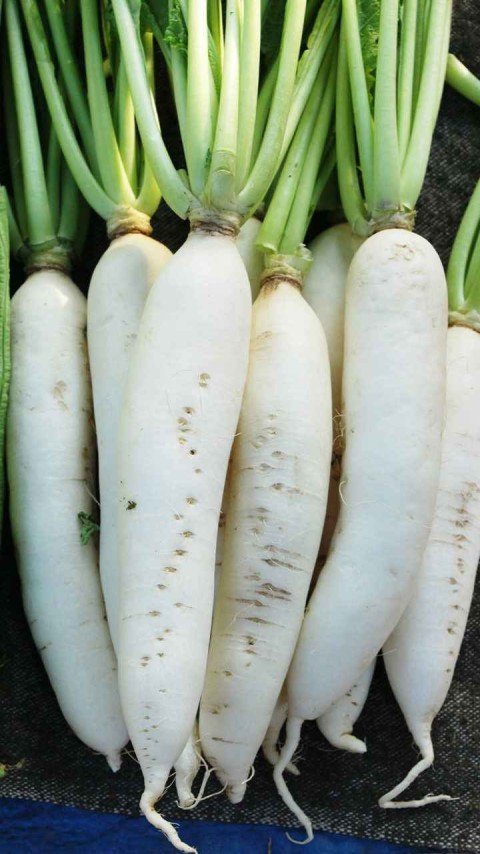
Raddish ( Raphanus sativus L. ) is an important root vegetable crop belonging to the family Cruciferaceae. It is a fast growing, cool season crop cultivated mainy for its fleshy, edible taproot, although it’s young leaves are also consumed. Raddish roots may be white, red, pink, purple or black depending on their variety.
It is rich in vitamin C, folate, potassium, fibres and antioxidants and is commonly eaten raw, cooled, pickled, or used in salads. Raddish can be grown in a short period, making it suitable for kitchen gardens, commercial vegetable production, and multiple- cropping systems. It prefers cool temperatures and we’ll drained, fertile soils for good quality root development.
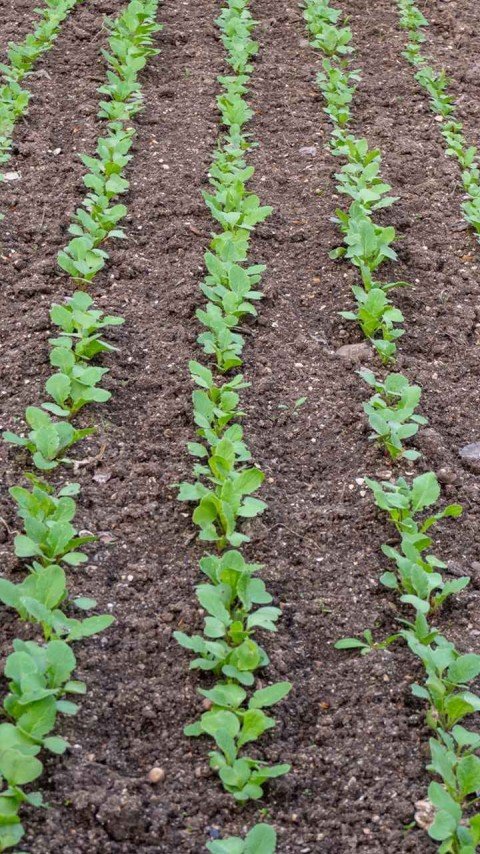
Table of Contents
Taxonomy:
- Scientific name: Raphanus sativus / Raphanus caudatus
- Family: Cruciferaceae
- Chromosome number: 2n=2x=13
- Origin: Mediterranean region
- Ancestor: Raphanus raphanistrum
Nutritive value:
- It is a rich source of vitamin C (Ascorbic acid), B 12
- Sugar present in raddish is glucose.
- Pungency is due to Isothiocynate.
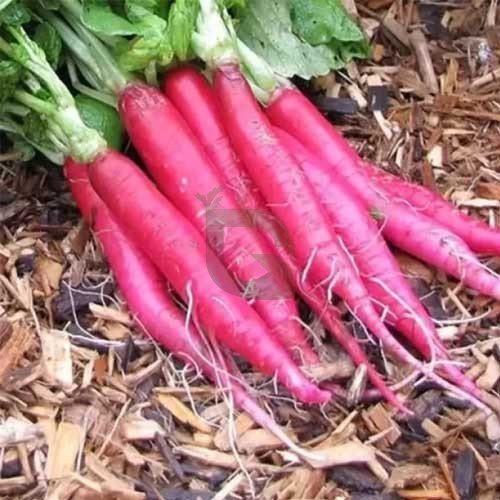
- Pigmentation: Red colour of raddish is due to cyanidin and purple colour is due to Raphanusin.
Uses:
- Raddish is used in making salads, pickles, etc.
- Roots are used for curing liver or gall bladder treatment.
- Fresh leaves of raddish are used as laxative and diuretic.
- Takon is a famous pickle made in japan.
Area and production:
In Indi First is West Bengal.
Botany:
- Edible portion of raddish is fleshly roots.
- Root is fusiform in nature.
- Edible root develops from both primary roots and hypocotyl.
- Length of roots varies from 2.5 cm – 90 cm.
- Root colour varies from red, purple, yellow and white.
- Inflorescence is terminal raceme
- Flowers are white in colour
- Fruit is called Siliqua.
- Seed are generally reddish brown in colour and 3 mm diameter.
- It is cross pollinated crop.
- Generally entomophyllus pollination (Honey bee).
Classification:
- Small rooted or European Raddish: It is small and stumpy in shape. Seed production can only be done in hilly regions.
- Large rooted and Asiatic Raddish: Mainly grown in Asian region, China and Japan. Seed production can be done in plains.
- Leaf Raddish or Fodder: Root portion is absent. Mainly grown for fodder or green manure purpose.
- Red – tail Raddish / Mougri Raddish: South – East Asia mainly grown for leaves and immature seed pods.
Variety:
Tropical: Pusa desi, Pusa Chetki, Pusa Jamuni ( it is first purple fleshed variety), Pusa Gulabi ( pink fleshed variety), Arka Nishant ( multiple disease resistant variety).
Temperate varieties: Pusa Himani, White Icicle, Rapid Red Whitetipped, Scarlet Long, Scarlet Glove.
Soil:
- It requires sandy loam soil.
- pH should be 5.5 – 6.8.
- Heavy soils are undesirable
Climate:
Temperature for root development, better flavour, texture, and size is 10 – 15 ⁰C.
Sowing Time:
- Plains: Asiatic- August- January, European – September – March.
- Hills: Northern – 1st fortnight of march till late october, Southern – April – January.
Seed rate:
It requires 9 – 12 kg/ha.
Spacing:
- Temperate :- 30 × 7.5 cm.
- Tropical:- 45 × 6 – 8 cm.
- Depth of sowing:- 1.5 – 3 cm.
Seed treatment:
Captan @ 3 g /kg of seed.
Manures and fertilizers:
- Well rotten 20 tonnes of FYM, 15 days before sowing is required.
- NPK 80-100 N, 40-60 P, 80-90 K kg/ha initially at the time of planting and two split doses at plant’s early growth and second application at the time of root formation is given.
Irrigation:
- In Spring summer number of irrigation 6-7 days interval and 10-12 days interval in winter.
Intercultural operation:
Intercultural operation followed are thinning, hoeing, weeding, gap filling, earthing up, etc.
Harvesting:
- Depending upon the varities 25 – 55 DAS after sowing.
- Temperate variety matures at 25-30 DAT.
- Delay in harvesting bitterness and pithiness of root.
Yield:
- Tropical:- 15-20 tonnes/ ha.
- Temperate:- 5-7 tonnes/ ha.
https://agritech.tnau.ac.in/horticulture/horti_vegetables_radish.html