Introduction:-
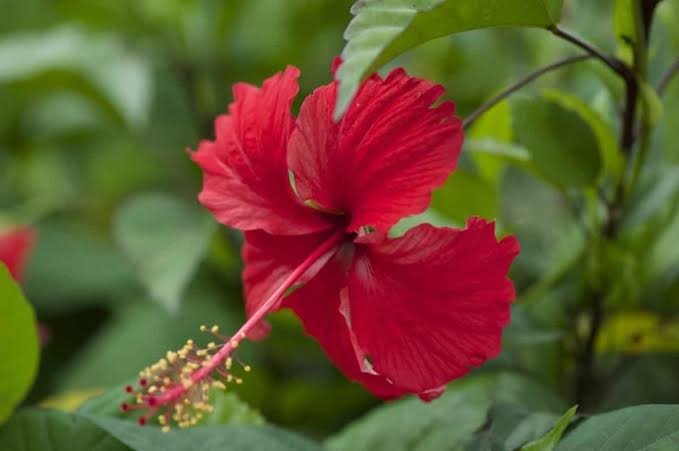
Hibiscus (Hibiscus rosa-sinensis L.) is ab important ornamental flowering shrub belonging to the family Malvaceace. It is commonly known as China rose, shoe flower, or Gudhal in Hindi. It is widely cultivated in gardens, parks, homes, and landscapes because of its large, attractive flowers and evergreen foliage.
Hibiscus flowers are available in different colours, including red, pink, yellow, orange, white, and traditional hair-care preparations. Proper selection of varieties, soil preparation, irrigation, pruning, and pest management are essential for successful hibiscus production.
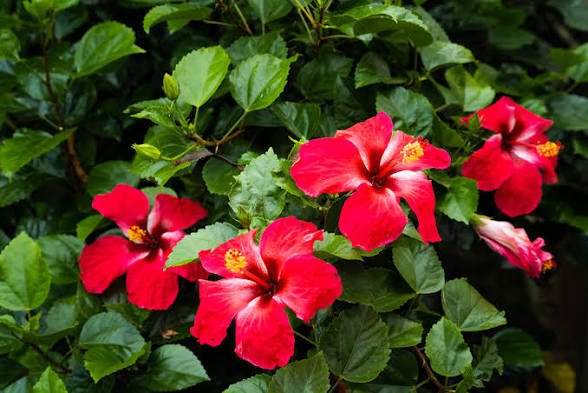
Table of Contents
Botanical classification:
- Scientific name: Hibiscus rosa-sinensis
- Family: Malvaceae
- Common name: China rose
- Hindi name: Gudhal
- Origin: Commonly associated with tropical Asia; it’s exact original native range is uncertain.
- Nature: Evergreen perennial shrub
- Propagation: Mainly through stem cuttings, grafting, and air layering.
Climate and temperature:
Hibiscus grows well in warm, tropical and subtropical climates. It requires sufficient sunlight, moderate humidity, and protection from frost.
- Optimum temperature: Approximately 18-32 ⁰C.
- Sunlight: Around 4-6 hours or more of direct sunlight daily for good flowering , depending on the cultivar and local climate.
- Rainfall: It grows well where moisture is adequate and drainage is good.
- Frost: The plant is sensitive to severe cold and frost.
- Wind: Protection from strong winds help prevent damage to branches and flowers.
in indian conditions , hibiscus can be grown throughout much of the year, although flowering may slow during extreme heat or cold.
Soil requirements:
Hibiscus grows best infertile, well drained loomi rich in organic matter.
- Ideal soil pH: Approximately 6.0-7.0.
- Soil type: Sandy loam or loam.
- Organic matter: Well-decomposed farm yard manure or composed improves soil structure and fertility.
- Drainage: Essential, because water logging can cause root rot.
four import cultivation, a suitable growing mixture can be prepared using garden soil, compost, and cocopeat or coarse sand . Use a pot with sufficient drainage holes.
Popular varieties:
several habiscus cultivars are popular for ornamental cultivation.
- Red hibiscus: Commonly gross in home gardens and religious places.
- Yellow hibiscus: attractive yellow flower suitable for landscaping.
- Pink hibiscus: Popular for ornamental gardens.
- White hibiscus: Used in gardens and decorative planting.
- Double-flowered hibiscus: Produces flowers with multiple layers of petals.
- Hybrid hibiscus: Selected cultivars, offer unusual flower shapes, colors and sizes.
variety selection should depend on flower color, plant growth habit, local climate, and market demand.
Propagation methods:
hibiscus can be propagated by several methods.
A. Stem cuttings: This is the most common and economical method.
- Select healthy, semi-hardwood shoots.
- prepare cutting approximately 10- 15 cm long with several nodes.
- Remove leaves from the lower portion.
- insert the cuttings into a moist well-drained rooting medium.
- Keep them in the bright, indirect light and maintain moderate moisture.
rooting usually takes a few weeks, depending on temperature, cultivar and growing conditions.
B. Air layering :- A healthy branches partially girdled end raped with moist routing medium until roots develop . The rooted branch is then separated and planted.
C. Grafting:- This method is used to multiply selected cultivars or combine desirable flowering characteristics with suitable rootstocks.
Land preparation an planting:
prepare the field by removing weeds, stones , and plant debris. Dig planting pits approximately 45×45×45 cm, adjusting the size to solid condition and plant material. Mix the excavated top soil with well decomposed compost or farmyard manure.
plant rooted, cuttings or nursery plants carefully without damaging the route roots
For garden shrubs spacing of approximately 1-1.5 m may be suitable, depending on the cultivar and whether the plants are intended for hedges or individual specimens. Wider spacing may be necessary for vigorous, spreading cultivars.
Planting is easiest during the monsoon or another period when moisture is adequate and water logging can be avoided.
Manures and fertilizers:
hibiscus requires balance nutrition for healthy growth and flowering.
- Apply well decomposed, farmyard manure or composed periodically.
- Use a balance fertilizer according to the soil, fertility and plant growth.
- During active growth, a suitable fertilizer containing nitrogen, phosphorus, and potassium, supports foliage, roots, and flowers.
- Avoid excessive nitrogen because it may promote leafy growth at the expense of flowering.
- Follow fertilizer label instructions and avoid applying concentrated fertilizer directly against the stem.
A soil test is the best way to determine the actual fertilizer requirement.
https://www.fao.org/fileadmin/user_upload/inpho/docs/Post_Harvest_Compendium_-_Hibiscus.pdf