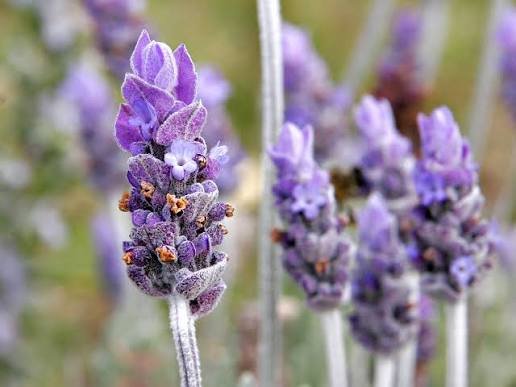
Introduction:
Lavender is an important aromatic and medicinal plant belonging to the mint family, Lamiaceae. It is widely cultivated for its fragrant flowers and essential oil, which are used in perfumes, cosmetics, aromatherapy, soaps, medicines and various personal-care products. Lavender is also popular as an ornamental plant because of its attractive purple, violet, pink or white flowers.
The botanical name of common English lavender is Lavender angustifolia. The plant is native to the Mediterranean region and is commercially cultivated in countries such as France, Bulgaria, Spain and other regions with suitable climates. In India, lavender Cultivation has gained attention in parts of Jammu and Kashmir and other suitable high- altitude areas.
Lavender is a perennial, evergreen or semi- evergreen aromatic shrub under suitable conditions. It’s success depends mainly on climate, soil drainage, variety selection, peoper irrigation and timely harvesting.
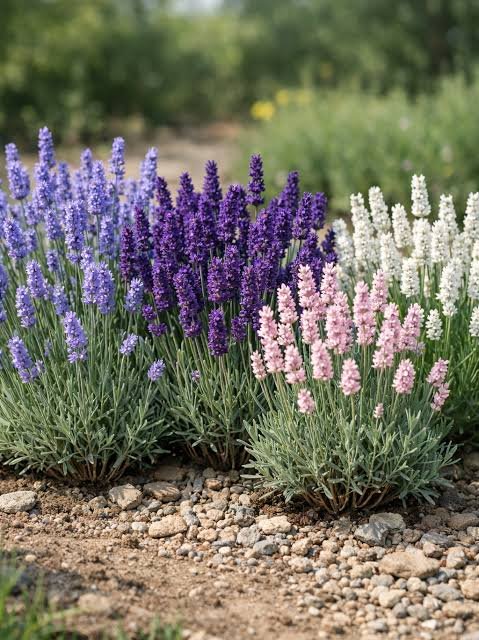
Table of Contents
Botanical classification:
- Botanical name:- Lavandula angustifolia.
- Family:- Lamiaceae
- Order: Lamiales
- Common name:- Lavender
- Plant type:- Perennial aromatic shrub
- Origin:- Mediterranean region
- Economic part:- Flowering tops
- Chromosome number:- Commonly reported as 2n=48 for L. angustifolia
Important varieties of lavender:
Different lavender species and cultivars are selected according to climate, oil quality, flower production and market requirements.
- English lavender:- (Lavandula angustifolia) Produces highly fragrant flowers and good-quality essential oil. It is suitable for perfumes, aromatherapy and dried flowers. It generally prefers cool conditions and well-drained soil.
- Spike lavender:- (Lavandula latifolia) Adapted to relatively warm Mediterranean conditions. It’s oil has a different aroma profile from English lavender and is used in fragrance and related industries.
- Lavandin ( Lavandula × intermedia ) A hybrid of English lavender and spike lavender . It is widely grown for commercial essential-oil production because many cultivars produce high quantities of flowers and oil.
- French or Spanish lavender:- (Lavandula stoechas) Recognized by its distinctive flowers heads with petal-like bracts. It is mainly used used as an ornamental plant and is not interchangeable with English lavender for essential-oil quality.
For commercial production, the variety should be selected according to the local climate, intended market and availability of genuine planting material.
Climate requirements:
Lavender grows best in sunny locations with relatively dry air and good soil drainage.
- Temperature: Many English lavender cultivars perform well in temperate climates, while some other species tolerate warmer conditions. A moderate growing season is generally preferred.
- Sunlight: At least 6-8 hours of direct sunlight daily is desirable.
- Rainfall: Moderate rainfall is suitable when drainage is good. Prolonged wet weather can encourage root diseases.
- Humidity: Low to moderate humidity is generally preferable, especially during flowering.
- Altitude: Suitable altitude depends on the species and cultivar. High-altitude Cultivation may be advantageous in some Indian Himalayan locations, but elevation alone does not guarantee success.
In the plains of Jharkhand, Bihar and other hot, humid regions, commercial Cultivation may be challenging because of high summer temperatures, monsoon moisture and poorly drained soils. A small trail plot should be evaluated before large-scale investment.
Soil requirements:
Lavender prefers light, well-drained sandy loam or gravelly loam soil. It can grow in relatively poor soils if drainage and sunlight are adequate.
- Ideal soil pH:- Approximately 6.5-7.5 for many cultivars; some varieties tolerate a wider range.
- Soil texture: Sandy’s loam, gravelly soil or well-drained loam.
- Drainage:- Exellent drainage is essential.
- Organic matter:- Apply well-decomposed farmyard manure in moderate quantities.
- Avoid:- Heavy clay soil, waterlogged fields and locations where water remains around the roots.
Before planting, test the soil for pH, drainage and nutrient status. The CSIR-Indian Institute of Integrative Medicine recommends well-drained soil and full sunlight for jts Kashmir lavender variety, RRL-12.
Propagation methods:
Lavender can be propagated by seeds, cuttings and in some cases, division or layering. For commercial plantation, rooted cuttings are commonly preferred because they preserve the characteristics of the variety.
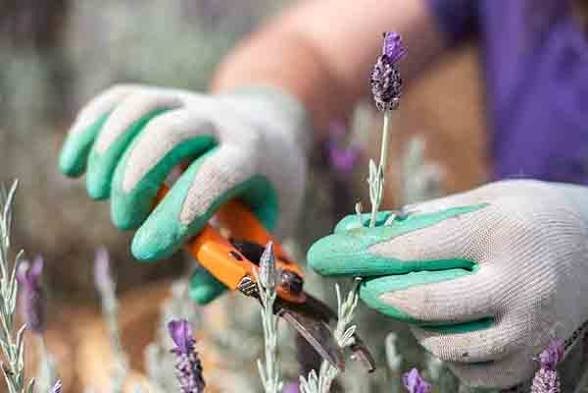
Propagation can be done through stem cuttings, seed propagation etc.
https://en.wikipedia.org/wiki/Lavandula